Mythical Games
I designed Blankos while the product direction was still open.
Casual, competitive, and collective were still open. I designed one profile the team could keep, then carried it into accessories and Party Pass.
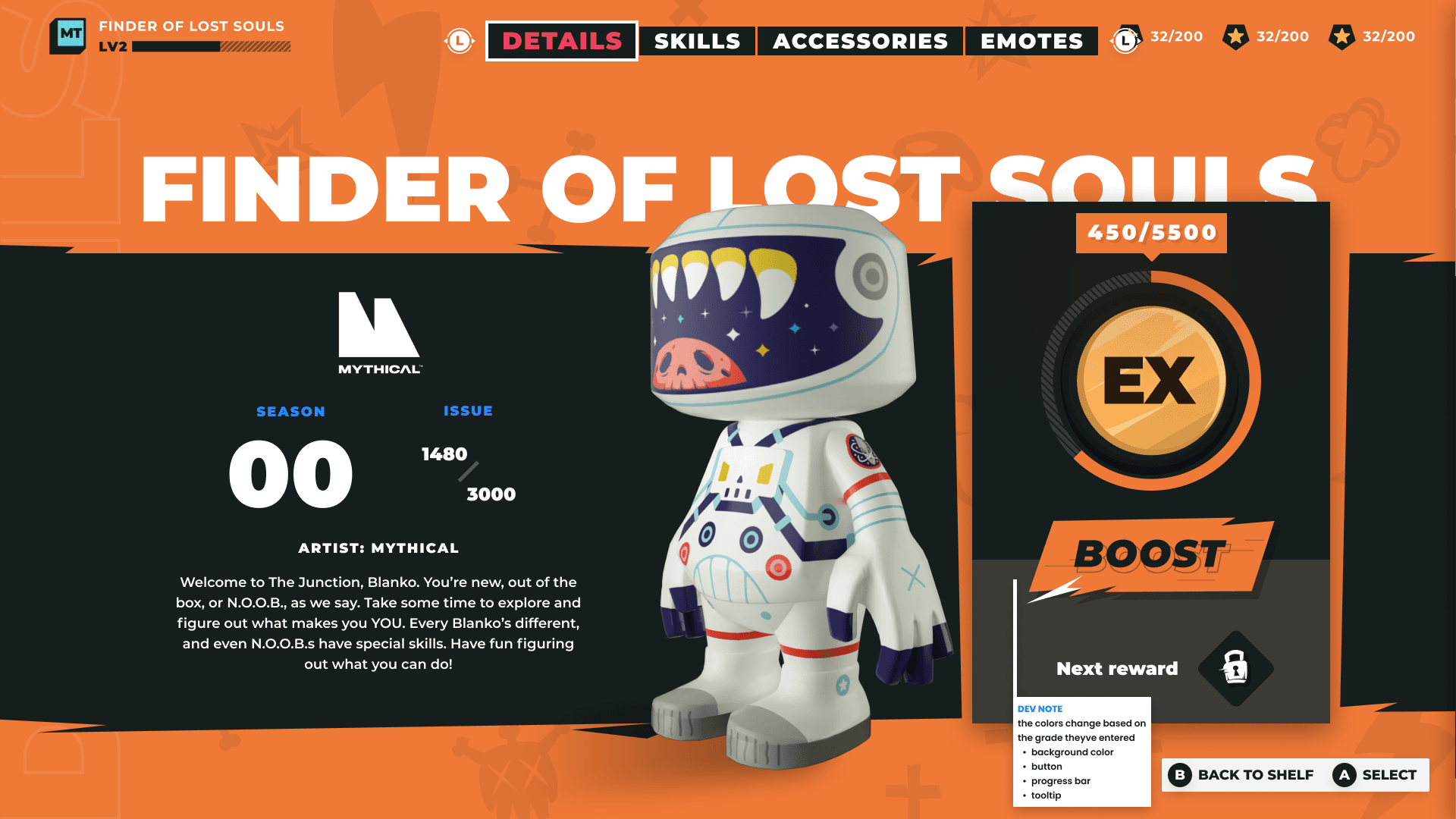
The direction was still open
Stakeholders were not aligned on whether the product was primarily casual, competitive, or collective. Each direction implied a different architecture.
I needed a structure the team could keep while that choice was still open.
Grade changes the profile inside one layout
Color, chrome, and icons change as a player advances. The five frames run from EX grade through XP allocation, confirmation, transition, and the MT result.
The same surface holds those grades, so the team maintains one profile.
EX grade: 450/5,500 XP, next grade locked
Accessories and Party Pass use that profile
A Blanko is the character you play and the thing you own. Accessory states cover default, focused, equipped, locked, and pressed, so new items can use the same interaction.
Party Pass is the longer progression and monetization track on the same product.
The menu can hold more than the HUD
The Challenges menu is for browsing. The in-game HUD has to show progress while play stays in front.
Incomplete and complete stay consistent in both places.
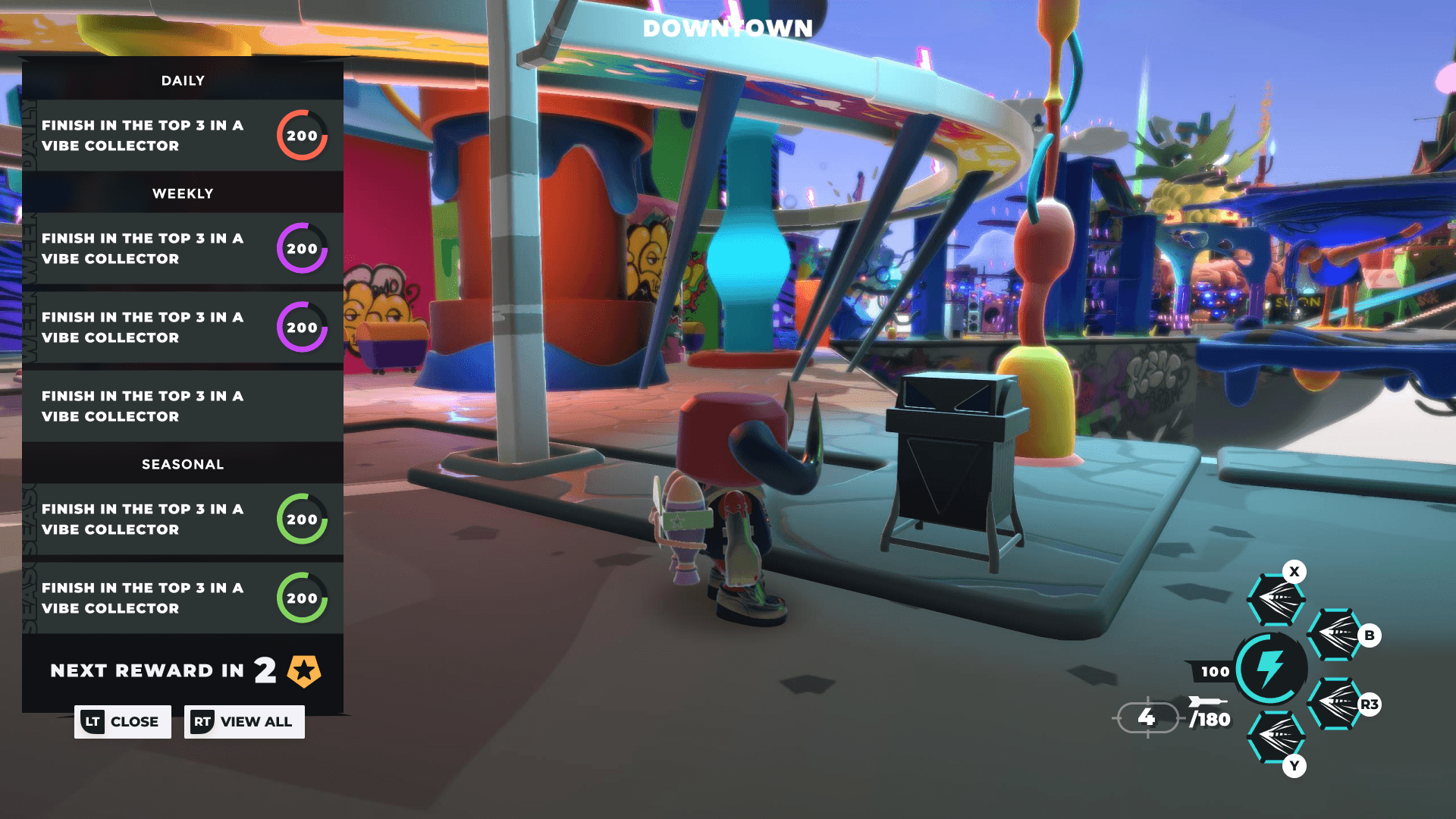
The component sheet the team reused
I made patterns for the features I owned: components, color, typography, forms, modals, icons, and navigation.
It was a team-level system for that feature set.
Process archive & additional artifacts 2 sections
Design pattern library
The remaining pattern sheets: typography, color, forms, icons, modals, and navigation.
Additional Battle Pass / Party Pass frames
Further reward-track frames from the same system.
Next / H1Z1